
Floating Wind
Floating wind is moving operations into deeper, more exposed waters. Situated further from port infrastructure, marine access is complicated by the divergent movements of the vessel and the turbine. Maintaining safe and reliable access under these conditions is one of the most operationally complex challenges in offshore wind today. Ampelmann's motion compensated gangway systems have supported floating wind operations across four different projects in Europe, ensuring safe personnel and cargo transfers in sea states as high as 4,5m Hs.
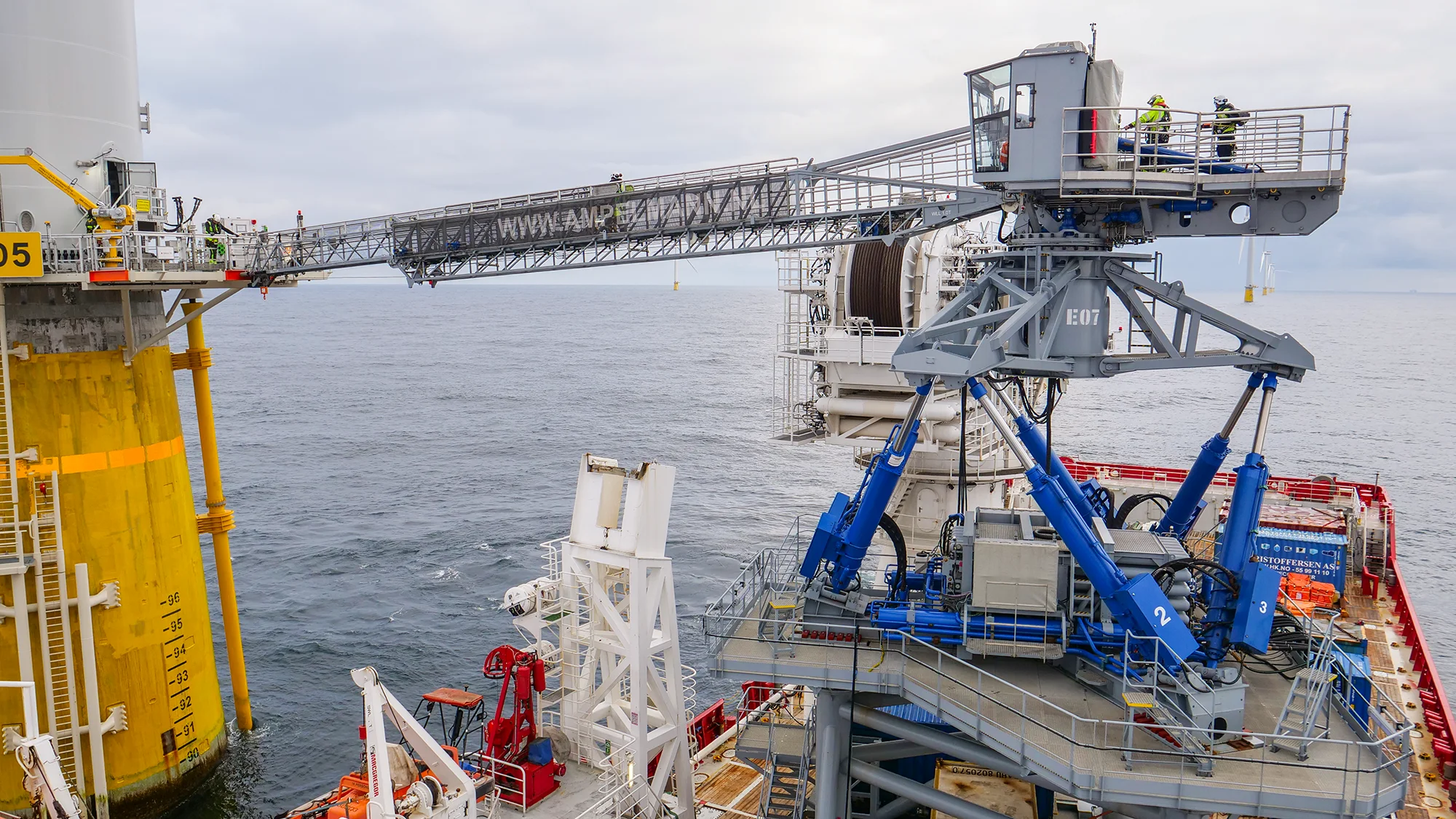
Floating wind is changing offshore operations
Floating wind has moved from concept to proven technology. The first commercial wind farms are now online in Europe and Asia, demonstrating the huge potential of this technology to expand the global supply of clean and sustainable energy. But as the sector expands into deeper, more remote, seas, operators face increasing pressure to maintain uptime, reduce waiting on weather and ensure safe offshore access in dynamic marine environments.
Moving from fixed to floating infrastructure not only introduces new operational challenges, it means taking on more individual risk. Because floating turbines and vessels move independently from each other, conventional access solutions struggle with these complex motions. As floating wind projects continue to scale globally, offshore operations need reliable solutions that can maintain high standards of safety, operational continuity and workability under demanding conditions.

Motion compensated gangways for floating wind
Our motion compensated gangways are designed to maintain a stable connection between vessels and floating offshore structures, even when both are moving in different directions at different speeds.
Uniquely in the market, our A-type and E1000 compensate for motions in six degrees of freedom. This makes them ideal for operations that require handling complex motions in rough seas. At very low telescoping speeds no higher than an escalator, they keep the movement of the gangway within the human limit, simultaneously ensuring high workability, vessel utilisation and the safety of personnel. Capable of both personnel and cargo transfers up to 1000kg, our gangways can support a wide range of floating wind activities in sea states up to 4,5m Hs. This includes anything from construction and commissioning to inspections and long-term maintenance operations.


up to 4.5m Hs
Active motion compensation

>99%
Technical workability

24/7
Operational support
Our track record in floating wind
To date, Ampelmann has supported operations on floating wind farms across four different projects in Europe. This includes major work for Equinor at Hywind Tampen, the world’s largest commercial floating wind farm. With a proven track record in floating-to-floating work scopes in the oil, gas and wind market, Ampelmann has extensive experience supporting safe personnel transfers in dynamic offshore conditions where workability, safety and uptime are critical requirements.
From harsh winter campaigns in the North Sea to operations involving different floating foundation designs, our teams have developed extensive experience supporting safe personnel transfers in complex floating-to-floating environments. By combining motion compensated gangways with experienced offshore crews and local operational support, floating wind campaigns can continue safely and efficiently throughout the year.
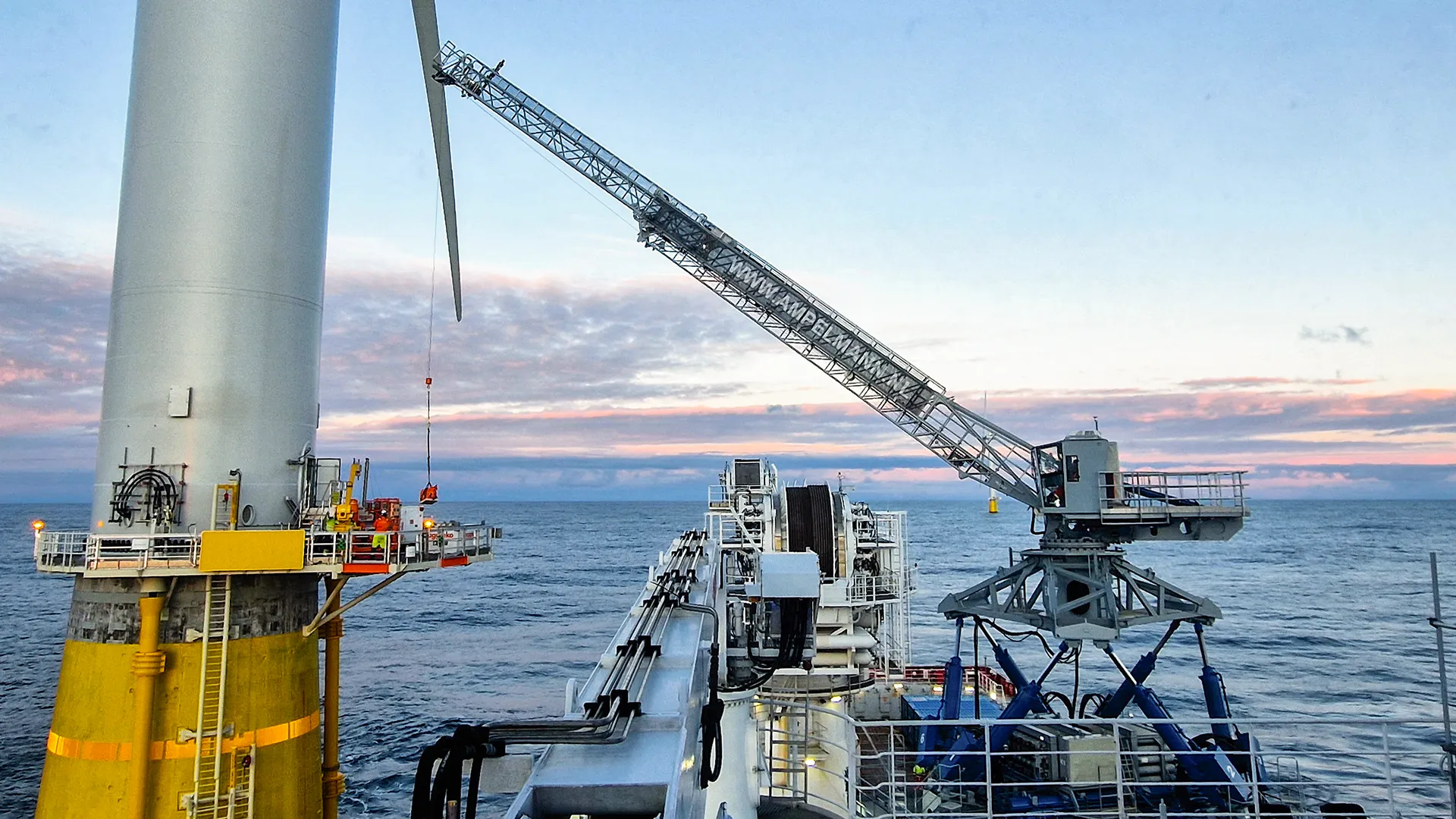
Explore our floating wind projects and insights here
Need to transfer personnel and cargo to a floating wind turbine?
Get in Touch
Thank you for reaching out. We will get back to you as soon as possible
Oops! Something went wrong, please try again.